When pondering careers, medical students and physicians have myriad choices following postgraduate residencies and/or fellowships. While many delve into traditional clinical positions, others pursue nontraditional roles.
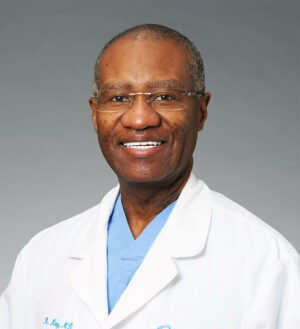
Rudye C. King
For instance, Rudye C. King, MD ’93, has blended clinical and non-traditional roles throughout his career. Upon earning his medical degree and conducting a year of research at the University of Wisconsin School of Medicine and Public Health (SMPH), he completed an obstetrics and gynecology (OB-GYN) residency in New Orleans. Later practicing OB-GYN in a few states, King also advanced into clinical and organizational leadership roles. He now owns and operates 10 businesses spanning areas such as tax lien overage recovery, artificial-intelligence-driven marketing, and identity theft protection. His entrepreneurial work reflects his interests in innovation, financial strategy, and support of individuals and communities.
Realizing that medical students and alumni embrace learning from fellow Badgers like King, the Wisconsin Medical Alumni Association (WMAA) and SMPH Academic and Career Advising Program created the Alternative Careers in Medicine panel series. Offered since 2022, the virtual, twice-yearly sessions feature distinguished medical alumni who share advice for those interested in similar paths.
According to WMAA Executive Director Sarah Rothschild, who recruits alumni speakers from various fields, regions, and class years, “Each panelist has had a unique journey leading them to utilize their medical degree and postgraduate training in a non-traditional way. This enforces the value of training for roles outside of or combined with clinical responsibilities.”
Panelists’ careers have included pharmaceutical research, patient advocacy, medical informatics, entrepreneurial and government work, clinical leadership, environmental endeavors, and more. Some such roles provide flexibility in life-work balance.
Find your passion inside of medicine and outside of medicine because sometimes these passions come together to create a unique career.
Rudye C. King
Sara Brask, SMPH director of career advising, said student satisfaction scores on the Association of American Medical Colleges’ required Graduate Questionnaire have increased related to awareness of alternative careers in medicine since the panel discussions began.
“Students enjoy learning about different career pathways and how to look for opportunities. We have been able to connect students with panelists whose careers resonate with their interests,” said Brask.
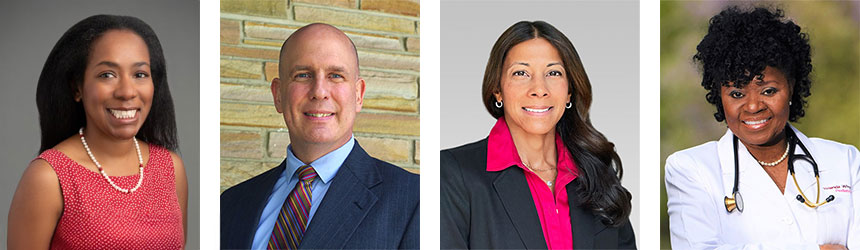
For the March 2026 session, Christine Sharkey, MD (PG ’14), SMPH clinical associate professor of medicine, was the moderator. Panelists were King, Nicholas Siebers, MD ’00, Soma Struck, MD ’08, and Yolanda Whyte, MD ’99.
From left: Christine Sharkey, Nicholas Siebers, Soma Struck, Yolanda Whyte
In describing his philosophy, King said, “Find your passion inside of medicine and outside of medicine because sometimes these passions come together to create a unique career.”
Siebers, who previously practiced primary care and hospitalist medicine, shared his experience switching into the pharmaceutical industry; he now does remote monitoring of late-phase clinical trials for an international company. Struck described how she shaped her medical-pediatrics and hospitalist career to the point of devoting about half her time in health system leadership roles, including as regional medical director of a patient transfer center. And Whyte noted that she has done “a little bit of everything” in her pediatrics career, including child protective services, and inpatient and outpatient care. Whyte now specializes in environmental health and helps train AI models to increase accuracy.
About these panelists, King noted, “A common thread that led to success and satisfaction is that we followed our passions. During our clinical practices, we explored other dimensions and found meaningful roles.”
Whyte said, “I always recommend that, as physicians, we stay authentic and stay connected with our inner child. Don’t be afraid to be innovative. As they say, fortune favors the bold.”
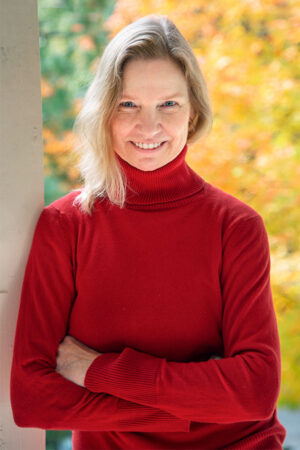
Brita E. Lundberg
All panelists credit strong mentors with helping along the way. Such was the case for a panelist in February 2024 — Brita E. Lundberg, MD ’91 (PG ’94), whose career evolved from a clinical practice and faculty role to becoming the founder of a medical consulting/patient advocacy practice. She calls Dennis G. Maki, MD ’67, emeritus professor of medicine in the SMPH Department of Medicine, her “biggest mentor in medical education.”
Lundberg continued, “Dr. Maki’s methodical approach to diagnostic dilemmas informs the way I approach patients who come to me searching for answers about their medical conditions, whether they have a diagnostic dilemma or a new diagnosis they would like to better understand, or are seeking a second opinion.”
After earning her medical degree at SMPH, Lundberg completed an internal medicine residency at UW Health and an infectious diseases fellowship in Denver, and established a career in academic medicine. When she had a child with special health care needs and realized many relatives needed her time as a patient advocate, she eventually launched her advocacy organization. She also holds leadership positions in environmental and occupational health organizations.
“I tell interested students that the opportunity to empower patients as they navigate difficult diagnoses and decisions is tremendously satisfying and more flexible than a traditional medical practice,” said Lundberg.