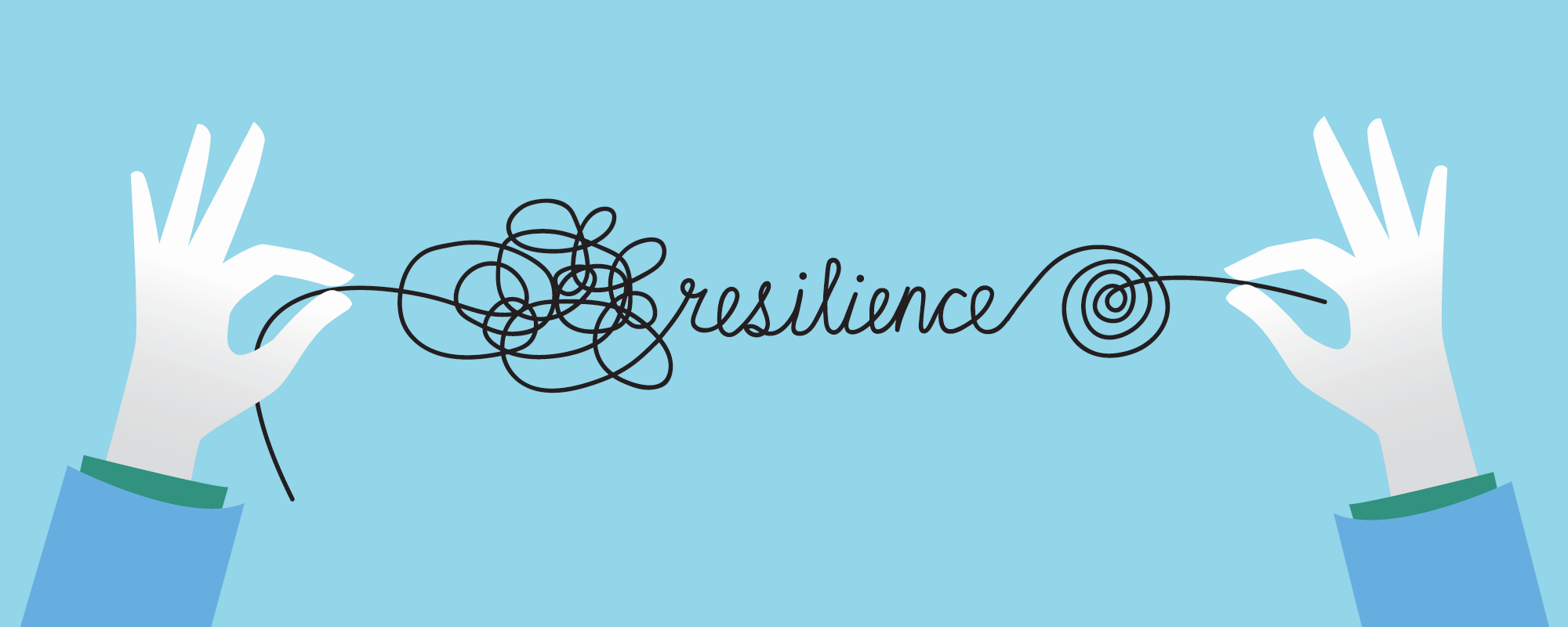
I can confidently say I’ve learned a lot in medical school. I know what SIGECAPS stands for and finally can recite the equation to calculate the compensatory partial pressure of CO2 in metabolic acidosis from memory. Aha! You have major depressive disorder! And you, you definitely have metabolic acidosis without respiratory compensation! The list continues, but now with six months of rotations under my belt, I think I’m learning the best lesson of all. Resilience.
As medical students, we have the great privilege of understanding how the human body works, down to every breath and step we take. It also means that we must understand all the ways the body can be damaged, hurt and fail. It’s terrifying — all the bugs, diseases and injuries that can affect our physical beings. As a self-proclaimed “scaredy-cat,” I have a lot of fear, probably more than that healthy amount everyone talks about. Now, knowing some of the nitty-gritty details of the beautiful, fallible systems that operate inside the human body makes my mind go on gory, horrifying field trips, thinking of all the things that could happen to me, my friends, my family or anyone I know.
Outside of being scared of failing out of medical school or for my family’s health or the state of politics in our country, there have been many times when I have been afraid of what I might see going into the hospital each day — talking with my friends, asking myself what-if scenarios and playing in my mind how I would react if I see something devastating or meet a sick patient who reminds me of my mother or brother. My fears twist tightly around my chest and fill my head with thoughts that can’t be pushed away. An instinct tells me to run away and avoid those scary possibilities; however, even in the limited number of experiences I’ve had so far, I’ve witnessed resilience that floors me and brings me out of my twisty, dark place of fear. The strength of people is an amazing thing.
The strength of people is an amazing thing.
To me, resilience has many faces. A wrinkled, sweet, elderly man who has just received news that nobody wants to hear yet shares a nod of strength and a quiet “So, what happens next?” A young mother who is about to give birth in triage but somehow — amid the blood, chaos, and pain — says a polite “Thank you, doc” with a wince. A courageous smile and nod of the cutest 5-year-old boy who is told he has to sleep in an unfamiliar hospital bed without his favorite toys and siblings for a couple more days. There are countless other examples. At first, I could not have put a word to what I saw in all these people. Eventually, I began to understand the common thread.
Each person is afraid of many things. Just like me, inside each person, there are little dark clouds lurking in his or her mind or talons waiting to halt the breath in their throat. I know I can’t ever fully understand and can only imagine the fears that creep through their minds, becoming tangible in real life, but they endure. They push past it all and choose kindness, courage, and perseverance every day.
I’ve learned a lot. I know and continue to learn what a privilege it is to be there for people on their worst days and bear witness to the steadfast resilience, immense bravery, and persistence within people who have to face challenges none of them has chosen. I still don’t know exactly how I would react if I were on the other side of the doctor-patient relationship in many different situations, but I know that I owe each of my patients every ounce of my compassion and dedication to this field. I am still a scaredy cat, but I show up. It is the very least I can do.
About the Author
Sophia Liu
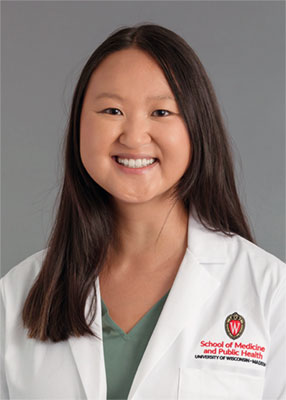
Sophia Liu, now a third-year medical student at the University of Wisconsin School of Medicine and Public Health, wrote this essay in her second year of medical school. From Waunakee, Wisconsin, she chose to attend this medical school because she wanted to return to her home state — after earning her undergraduate degree in chemical engineering at Columbia University in New York — to be close to her parents and because of the school’s dedication to community, research and public health.
In medical school, Liu serves as a Wellness-Inspired Student Enrichment Program representative for her class and volunteers with MEDiC, the student-run free clinics in the Madison area. In any rare spare time amid her busy schedule, Liu is learning to crochet, loves hosting get-togethers with friends, and hopes to run her second half marathon and first marathon in 2026.
Liu said, “Being a student at the UW School of Medicine and Public Health has been one of the best and most challenging experiences I have had so far, and I am grateful to all the physicians and mentors I have met through the school.”