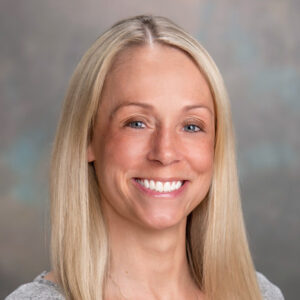
At Marshfield Clinic in Marshfield, Wisconsin, I practice breast imaging. I also am part of a subspecialty radiology practice in which I am the primary breast radiologist in Marshfield.
I read all types of breast-related imaging, including mammograms, ultrasounds, magnetic resonance
imaging, and molecular breast imaging. I also perform biopsies under radiological guidance and localize breast cancers before surgery.
A memorable patient was a 26-year-old mother of four who presented for breast imaging during my first year as an attending physician. She amazed me at how strong, brave, and resilient she was. When I told her she had a large cancer and needed several biopsies, she was willing to do whatever we recommended to get her diagnosis and move on with treatment.
I started medical school at the University of Wisconsin School of Medicine and Public Health (SMPH)
thinking I would choose primary care because of a mentor I had when I was growing up. In medical
school, I considered women’s health and obstetrics and gynecology. However, it became clear that I
enjoyed doing procedures but was not a surgeon, and I liked interacting with patients, but I did not enjoy outpatient clinics. During a radiology elective, I felt at home and enjoyed being part of the diagnostic team. Radiology exams felt like puzzles in which patients would present with symptoms and radiologists must figure out the reason for the symptoms.
I completed a diagnostic radiology residency at UW Health followed by a breast-imaging fellowship at the SMPH. I participate in the American Roentgen Ray Society, Wisconsin Medical Society, and Society of Breast Imaging.
Often, the radiologist is the first person to detect and inform a patient of a life-changing breast cancer diagnosis. I discuss imaging and biopsy results, do procedures, and conduct breast cancer risk assessments. We get to see our patients though challenging times.
Appreciating Collaboration
Nick Marinelli, MD ’09 (PG ’14, ’15)
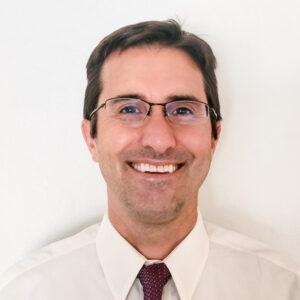
Nick Marinelli
I am a neuroradiologist with Aurora Health Care in Milwaukee, Wisconsin. There, I handle outpatient, inpatient, and emergency cases, including general neuroradiology, neurovascular, neuro-oncology, and head and neck cases. I also review cases for multidisciplinary conferences.
Each time I help plan and deploy a new imaging technique, such as an application for computed
tomography or magnetic resonance (MR) imaging, I find it exciting because we can have a greater impact on patient care. This drew me to the field of radiology, which has constant innovation.
For example, several years ago, we began using a brain MR angiography technique that can help stratify aneurysm risk or diagnose vasculitis or other vasculopathies by assessing vessel wall inflammation. The information helps clinicians better make diagnoses and apply proper treatments more quickly and non-invasively. This technique had been investigated, in its early stages, at UW Health.
Prior to attending medical school at the University of Wisconsin School of Medicine and Public Health (SMPH), I worked as an engineer for an imaging device company and was fortunate to gain exposure to several radiology departments throughout the country. This was a driving force in my desire to go to medical school and become a radiologist, so I could provide patient care and maintain technical elements in my work. While attending SMPH, I participated in its Shapiro Summer Research Program. I was exposed to neuroradiology research, an experience that furthered my interest in this field. After medical school graduation, I completed a radiology residency at UW Health and a neuroradiology fellowship at SMPH.
Radiology offers many subspecialties with different amounts of interpretive versus procedural work.
Skilled problem solving and collaboration are required to succeed in this specialty. Some subspecialties may have less frequent patient interaction, but this field excels in opportunities to develop relationships with health care providers throughout the system. I enjoy working with nurses, advanced practice providers, and physicians in other specialties.
Consulting Across Specialties
Stephen Tang, MD ’14 (PG ’19, ’20)
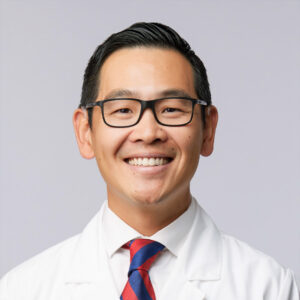
Stephen Tang
I am a neuroradiologist practicing primarily at Legacy Good Samaritan Medical Center in Portland,
Oregon. Good Samaritan is a comprehensive cancer center, so I often participate in the care of oncology patients in addition to a more general mix of patients referred by neurologists and neurosurgeons.
One aspect of radiology that I appreciate is the fact that all diagnostically undifferentiated patients will need to be imaged at some point, bringing us into their care through diagnostic imaging and/or image-guided procedures.
It is difficult to pick just one memorable case to share, as I come across so many interesting cases daily. One such patient required a brain magnetic resonance imaging procedure for refractory epilepsy. I was able to identify a subtle finding of focal cortical dysplasia, for which surgery often provides seizure control and can considerably improve patients’ quality of life.
When I began medical school at the University of Wisconsin School of Medicine and Public Health
(SMPH), I was interested in neurology; however, I quickly realized that the aspect of the field I most enjoyed was the correlation of anatomy and neurologic function. I discovered this lends itself very nicely to neuroradiology.
For my post-graduate training, I was fortunate to stay in Madison for my radiology residency at UW Health and neuroradiology fellowship at SMPH, with strong mentors and teachers along the
way!
I always tell interested medical students that radiologists can be the “doctor’s doctor.” I enjoy consulting with other doctors of different specialties and always learning more about how each specialist approaches patient care; this can vary among doctors practicing in the same specialty. Radiology also offers significant flexibility and allows me to stay in control of my work-life balance.
I encourage interested students to proactively search for opportunities to learn more about this field.