
Creative Healers
December 15, 2025
• VOL 27 • NO 3

Greg Horwitz, MD ’03
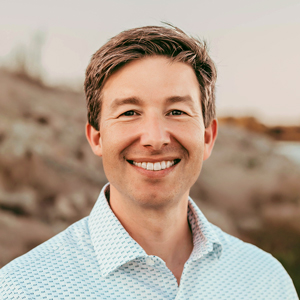
I practice general urology in Kansas City, Missouri, as part of Kansas City Urology Care, which we call KCUC — a large, private-practice group that specializes in urology and cancer care. We have urologists, medical oncologists, and radiation oncologists.
My most common surgeries are for kidney stones and benign prostatic hyperplasia (BPH) (enlarged prostate). Frequent cases are ureteroscopy with laser lithotripsy for stones and Aquablation® for BPH.
One of my most memorable patients required removal of a bladder stone the size of a softball and a couple of stones the size of golf balls.
I discovered the field of urology in my third year of medical school, when I completed the rotation and enjoyed the fun people and surgeries. It is hard to take yourself too seriously as a urologist, and the people I met on the rotation all seemed to enjoy their jobs. After I earned my medical degree from the University of Wisconsin School of Medicine and Public Health, I completed a urology residency at University of Kansas Medical Center.
The field is rewarding because patients feel a lot better after surgeries, and I love doing surgeries.
At the hospital, I spend most of my time on multiple administrative boards. I am a member of the executive committee of North Kansas City Hospital and recently switched from being the chair of surgery to being the head of the Surgery Advisory Committee. Running the hospital’s monthly morbidity and mortality case reviews keeps me busy.
Diverse opportunities in urology mean a practice could range from clinic and small-scope procedures to complex robotic surgeries and large, open cancer surgeries. Providers can practice everything or focus on one thing depending on what fits their interests. It never gets boring.
Kimberly Maciolek, MD ’18
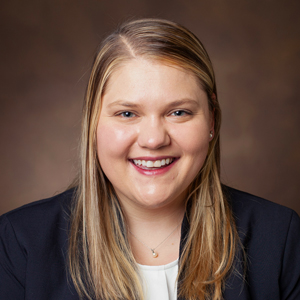
As an endourologist at the University of Virginia in Charlottesville, I mostly perform endoscopic surgery, including the treatment of kidney stones and benign prostatic hyperplasia (enlarged prostate).
A memorable patient was an older man who had urinary retention secondary to a massive prostate. He underwent transurethral laser enucleation of the prostate to remove the obstructing inner portion. He happily proclaimed he was able to pee as well as when he was a teenager! It is easy to take something as simple as voiding for granted until it does not work properly. To deliver this degree of life-changing surgery is one of the best parts of my job.
When I first stepped into an operating room, I knew I wanted to be a surgeon. My urology rotation in my third year of medical school brought out the happiest version of me. I fell in love with a wide range of technology from robots to implants to scopes with broad applications, including oncology, reconstruction, and infertility. To confirm my career choice before my fourth year of medical school, I completed a research year in University of Wisconsin School of Medicine and Public Health’s Department of Urology. This invaluable experience opened my eyes to the wonders and complexities of treatments for kidney stones.
After I earned my medical degree from the University of Wisconsin School of Medicine and Public Health, I completed a general surgery internship and urology residency at the University of Virginia followed by a fellowship in endourology and minimally invasive surgery at Vanderbilt University Medical Center.
I think urology is the best. It is a small community of surgeons with a good sense of humor — it comes with the territory! Often, the treatment goal is to improve the patient’s quality of life. Some aspects of urology focus on men’s health, but both male and female patients present with kidney or bladder tumors, kidney stones, and incontinence.
Rashid Siddiqui, MD ’18
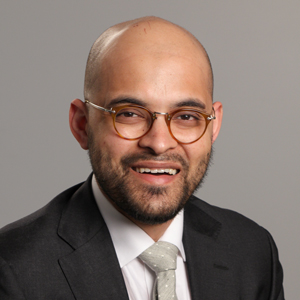
In November 2025, I joined Texas Oncology, a large urology and oncology private practice in Dallas. In addition to devoting some time to general urology, I am particularly interested in prostate and kidney cancers. As such, I perform minimally invasive surgery; robot-assisted laparoscopic radical prostatectomies; focal therapy; and robot-assisted partial and radical nephrectomies.
My journey into urology began during a research year at the National Institutes of Health, after my third year of medical school. There, I was studying bladder cancer, which allowed me to attend national meetings and interact with urologists — experiences that sparked my lasting interest in the specialty. After earning my medical degree from the University of Wisconsin School of Medicine and Public Health, I completed a urology residency at Northwestern University in Chicago. Most recently, I completed a robotic urologic oncology fellowship at University of Southern California in Los Angeles before I joined my new practice.
I consider urology to be a total hidden gem in surgery. You can do the whole gamut — from a five-minute procedure to a 12-hour open surgery, and everything in between. In fact, often, a small procedure can have as much of an impact on a patient as a long surgery.
I vividly remember an elderly patient whom I saw when I was a junior resident. He came to the emergency room after not having voided in more than 10 hours. Of course, he was miserable. Urology was called for catheter help. After some advanced maneuvers, I was able to place a catheter, and both the patient and I jumped for joy! He then proceeded to give me the biggest hug. It was a happy ending to his long day of misery! It is moments like these that remind us why we chose to go into medicine — or, in my case, medicine and urology.
All in all, I find urology to be a great specialty with great people and patients. It truly has something for everyone!
