
Creative Healers
December 15, 2025
• VOL 27 • NO 3

2020s | 2010s | 2000s | 1990s | 1980s | 1970s
Greg Horwitz, MD ’03
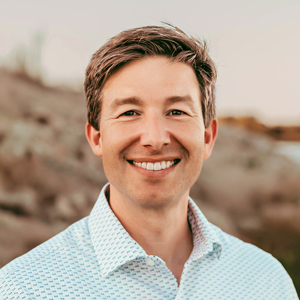
I practice general urology in Kansas City, Missouri, as part of Kansas City Urology Care, which we call KCUC — a large, private-practice group that specializes in urology and cancer care. We have urologists, medical oncologists, and radiation oncologists.
My most common surgeries are for kidney stones and benign prostatic hyperplasia (BPH) (enlarged prostate). Frequent cases are ureteroscopy with laser lithotripsy for stones and Aquablation® for BPH.
One of my most memorable patients required removal of a bladder stone the size of a softball and a couple of stones the size of golf balls.
I discovered the field of urology in my third year of medical school, when I completed the rotation and enjoyed the fun people and surgeries. It is hard to take yourself too seriously as a urologist, and the people I met on the rotation all seemed to enjoy their jobs. After I earned my medical degree from the University of Wisconsin School of Medicine and Public Health, I completed a urology residency at University of Kansas Medical Center.
The field is rewarding because patients feel a lot better after surgeries, and I love doing surgeries.
At the hospital, I spend most of my time on multiple administrative boards. I am a member of the executive committee of North Kansas City Hospital and recently switched from being the chair of surgery to being the head of the Surgery Advisory Committee. Running the hospital’s monthly morbidity and mortality case reviews keeps me busy.
Diverse opportunities in urology mean a practice could range from clinic and small-scope procedures to complex robotic surgeries and large, open cancer surgeries. Providers can practice everything or focus on one thing depending on what fits their interests. It never gets boring.
Kimberly Maciolek, MD ’18
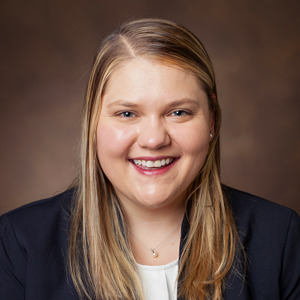
As an endourologist at the University of Virginia in Charlottesville, I mostly perform endoscopic surgery, including the treatment of kidney stones and benign prostatic hyperplasia (enlarged prostate).
A memorable patient was an older man who had urinary retention secondary to a massive prostate. He underwent transurethral laser enucleation of the prostate to remove the obstructing inner portion. He happily proclaimed he was able to pee as well as when he was a teenager! It is easy to take something as simple as voiding for granted until it does not work properly. To deliver this degree of life-changing surgery is one of the best parts of my job.
When I first stepped into an operating room, I knew I wanted to be a surgeon. My urology rotation in my third year of medical school brought out the happiest version of me. I fell in love with a wide range of technology from robots to implants to scopes with broad applications, including oncology, reconstruction, and infertility. To confirm my career choice before my fourth year of medical school, I completed a research year in University of Wisconsin School of Medicine and Public Health’s Department of Urology. This invaluable experience opened my eyes to the wonders and complexities of treatments for kidney stones.
After I earned my medical degree from the University of Wisconsin School of Medicine and Public Health, I completed a general surgery internship and urology residency at the University of Virginia followed by a fellowship in endourology and minimally invasive surgery at Vanderbilt University Medical Center.
I think urology is the best. It is a small community of surgeons with a good sense of humor — it comes with the territory! Often, the treatment goal is to improve the patient’s quality of life. Some aspects of urology focus on men’s health, but both male and female patients present with kidney or bladder tumors, kidney stones, and incontinence.
Rashid Siddiqui, MD ’18
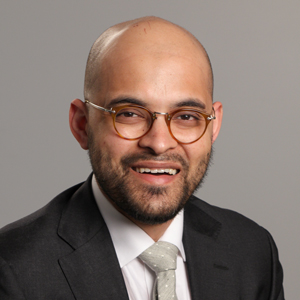
In November 2025, I joined Texas Oncology, a large urology and oncology private practice in Dallas. In addition to devoting some time to general urology, I am particularly interested in prostate and kidney cancers. As such, I perform minimally invasive surgery; robot-assisted laparoscopic radical prostatectomies; focal therapy; and robot-assisted partial and radical nephrectomies.
My journey into urology began during a research year at the National Institutes of Health, after my third year of medical school. There, I was studying bladder cancer, which allowed me to attend national meetings and interact with urologists — experiences that sparked my lasting interest in the specialty. After earning my medical degree from the University of Wisconsin School of Medicine and Public Health, I completed a urology residency at Northwestern University in Chicago. Most recently, I completed a robotic urologic oncology fellowship at University of Southern California in Los Angeles before I joined my new practice.
I consider urology to be a total hidden gem in surgery. You can do the whole gamut — from a five-minute procedure to a 12-hour open surgery, and everything in between. In fact, often, a small procedure can have as much of an impact on a patient as a long surgery.
I vividly remember an elderly patient whom I saw when I was a junior resident. He came to the emergency room after not having voided in more than 10 hours. Of course, he was miserable. Urology was called for catheter help. After some advanced maneuvers, I was able to place a catheter, and both the patient and I jumped for joy! He then proceeded to give me the biggest hug. It was a happy ending to his long day of misery! It is moments like these that remind us why we chose to go into medicine — or, in my case, medicine and urology.
All in all, I find urology to be a great specialty with great people and patients. It truly has something for everyone!
Nakul Aggarwal is the 2024-25 Americans for Medical Progress/American College of Neuropsychopharmacology Biomedical Research Awareness Day Fellow. He recently earned his medical and doctoral degrees from the University of Wisconsin School of Medicine and Public Health’s (SMPH) Medical Scientist Training Program. He earned his doctorate in neuroscience under the mentorship of Ned Kalin, MD, chair, SMPH Department of Psychiatry. Aggarwal’s graduate work in translational research focused on elucidating the neurobiological correlates of early-life anxiety. He has started a research-track psychiatry residency at Stanford University in California and plans to specialize in child and adolescent psychiatry.
Elizabeth Stoeckl, along with five co-residents in the SMPH Department of Radiology, proposed a resolution, Radiation Protection Apparel for Healthcare Workers, at the American College of Radiology’s annual meeting. The resolution was accepted, making it potentially the first resolution to be completely resident-written and accepted as policy.
Trevor Schell, a gastroenterology and hepatology fellow in the SMPH Department of Medicine, received a Poster of Distinction Award at Digestive Disease Week 2025. His poster was titled, “Incidence of Herpes Zoster in Pediatric Patients with Inflammatory Bowel Disease.”
Erin Theisen received a 2025 Women’s Health Career Development Award from the Dermatology Foundation for her work studying granzyme K in autoimmune skin disease. Theisen is a dermatology instructor at Harvard Medical School and a postdoctoral fellow at Brigham and Women’s Hospital in Boston.
Adam Bailey, assistant professor, SMPH Department of Pathology and Laboratory Medicine, received the Ann Palmenberg Junior Investigator Award from the American Society for Virology in July 2025. Named for the former director of the UW Institute for Molecular Virology, the award recognizes junior investigators who have made significant contributions to virology and display exceptional promise.
James Ircink serves as medical director of Madison Street Medicine, a nonprofit dedicated to addressing homelessness through health care. Since the organization began in 2015, it has expanded to offer multiple health clinics throughout the week. Ircink is a clinical assistant professor in the SMPH Department of Family Medicine and Community Health.
Jeffrey Jensen, an instructor in the University of North Carolina (UNC) School of Medicine’s Department of Medicine, received a UNC School of Medicine Physician Scientist Training Program Resident/Fellowship Award. It will provide funding for two years of Jensen’s research, which aims to identify and enhance novel immunotherapeutic targets in NUT carcinoma.
Augustine Saiz, Jr., was named the 2024-25 Outstanding Faculty of the Year by the University of California, Davis, Department of Orthopaedic Surgery, where he is an assistant professor. Saiz also was awarded a National Institutes of Health K08 grant for his proposal titled “Systemic and Local Immunomodulation of Fracture Healing in Polytrauma.” He conducts basic science research and has a clinical practice in orthopedic trauma.
Farah Kaiksow is the governor-elect for the American College of Physicians (ACP) Wisconsin Chapter. She will complete training in that role before she begins a four-year term as governor in spring 2026. As governor, she will serve as the ACP’s representative for the Wisconsin Chapter, providing a link between local members and national leaders. Kaiksow is an associate professor in the SMPH Department of Medicine’s Division of Hospital Medicine.
Dejan Micic was appointed chief of the Division of Gastroenterology and Nutrition at Loyola Medicine in the Chicago area. He brings extensive experience in gastroenterology and nutrition support to the position. Prior to joining Loyola Medicine, he was an associate professor in the Section of Gastroenterology, Hepatology, and Nutrition at the University of Chicago.
Brian Williams, associate professor, Division of Hospital Medicine and Complex Care, SMPH Department of Pediatrics, is serving on the executive committee for the American Academy of Pediatrics Section on Nicotine and Tobacco Prevention and Treatment. Williams’ term will continue through October 2026. The section aims to raise awareness about the importance of preventing tobacco-product initiation and exposure; treating dependence; and eliminating children’s exposure to tobacco, nicotine, and their emissions. Further, it aims to create support for pediatricians and other health care providers in this goal.
Brittany (Britt) Allen will receive the 2025 Richard B. Heyman Award from the American Academy of Pediatrics’ Council on Adolescents and Young Adults. This award honors a member who has made significant contributions to improving health outcomes for adolescents or to educating pediatricians about the unique health care needs of this population locally, regionally, and nationally. Allen is an associate professor in the SMPH Department of Pediatrics’ Division of General Pediatrics and Adolescent Medicine.
James Bigham was named Family Physician of the Year by the Wisconsin Academy of Family Physicians. His innovative approach to preventive care and dedication to the community have set him apart as a leader. His work on firearm injury prevention emphasizes the importance of integrating public health initiatives into practice. His course on this topic for medical students, residents, and health care providers illustrates the power of working with the community to create a safer, more inclusive space for all. He is a clinical professor in the SMPH Department of Family Medicine and Community Health.
Meghan Lubner, professor, SMPH Department of Radiology, was inducted as a Fellow of the American College of Radiology at its 2025 Convocation.
Lori Rosenstein was appointed chair of the Oncology Training Committee of the American Society of Clinical Oncology. In this role, she will help guide and educate directors of hematology/oncology fellowship programs. She practices hematology at Emplify by Gundersen in La Crosse, Wisconsin.
Wendy Molaska was named the Direct Primary Care (DPC) Physician of the Year by the American Academy of Family Physicians and the DPC Alliance. This national honor recognizes Molaska’s exceptional contributions to DPC and unwavering commitment to patient-centered health care. A family medicine physician, she owns a DPC clinic in Fitchburg, Wisconsin.
Kristen Nadeau was appointed as head of the Section of Endocrinology, Department of Pediatrics, Children’s Hospital Colorado. She will continue as the department’s vice chair for clinical and translational research.
Vicki Jackson recently became chief and chair of the Department of Medicine at Boston Medical Center and Boston University Chobanian and Avedisian School of Medicine. A nationally recognized leader in palliative care, Jackson served at Massachusetts General Hospital for more than 20 years.
Arthur R. Derse (MD ’80, JD ’87) is a new member of the Association of American Medical Colleges (AAMC) Board of Directors, for which SMPH Dean Nita Ahuja, MD, MBA, is serving as chair-elect. The new board’s one-year term will continue until the end of the AAMC’s annual meeting in November 2026. Derse is director of the Center for Bioethics and Medical Humanities, the Julia and David Uihlein Chair in Medical Humanities, and a professor of bioethics and emergency medicine at the Medical College of Wisconsin in Milwaukee.
Reginald Bruskewitz, professor emeritus of urology, SMPH, received the Lifetime Achievement Award from the Society of Benign Prostate Disease. The award recognizes individuals who have made outstanding contributions to the field of benign prostatic diseases.
