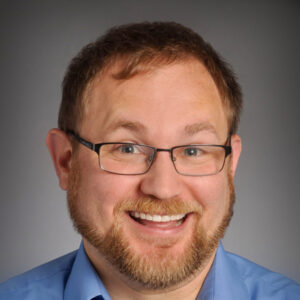
My primary clinical role at Children’s Wisconsin/Medical College of Wisconsin in Milwaukee is managing the health of children, teens, and young adults who have solid cancers and vascular anomalies. I also co-direct our multidisciplinary, precision Pediatric Oncology Clinic, COMPASS, where I provide molecularly targeted treatments for patients with relapsed and refractory cancers. Additionally, I am working to bring clinical trials to our patients and to develop and implement early-phase clinical trials utilizing cellular therapies.
I am involved in the Children’s Oncology Group’s Ewing Sarcoma Biology and Soft Tissue Sarcoma Steering Committees, which are working to develop rhabdomyosarcoma trials; the site primary and national scientific committees for the Beat Childhood Cancer Consortium, which is developing and implementing early-phase treatment protocols; and the site primary for the Consortium of Investigators of Vascular Anomalies, which is planning one of the first national, molecularly targeted trials for children and young adults with vascular and lymphatic anomalies.
During my pediatrics residency at RUSH University in Chicago, I found that oncology patients and families impacted me the most. Next, while I was working in pediatric critical care, I decided to enter a pediatric hematology/oncology fellowship. I am so happy that I gained that training for my current career.
I have been fortunate to see patients overcome incredible challenges and go on to graduate from high school, attend college, sometimes attend medical school, and walk down the aisle at their weddings. Unfortunately, some of my patients have passed away from their diseases, but I know I have made a difference in their lives when their families invite me to memorials or run/walks, or send me a Dairy Queen Dilly Bar at Christmas.
In this field, we support and guide patients and families through the most challenging times of their lives. While some situations can be devastating, I cannot think of a more rewarding, impactful career.
Treating Leukemias and Lymphomas
Julie Rivers, MD ’11, MS
Julie Rivers, MD ’11, MS
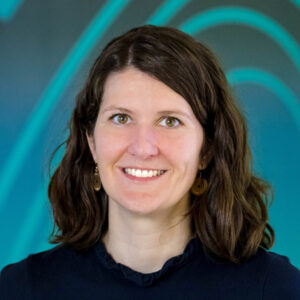
I am a clinical associate professor of pediatrics at the University of Washington and a pediatric oncologist at Seattle Children’s Hospital, where I treat children and young adults with leukemias and lymphomas. I have interests in pediatric non-Hodgkin lymphoma (NHL) and post-transplant lymphoproliferative disorder (PTLD).
One of my first patients was a toddler with trisomy 21 and a new diagnosis of acute lymphoblastic leukemia. She developed an invasive fungal infection with mucormycosis that penetrated her central nervous system. We could not give her the intensive phases of therapy because she needed her immune system to fight the fungal infection, and her anti-fungal medications interfered with most of the maintenance chemotherapy we would have given her. We told the family that she would either die from her leukemia or her infection, but she beat both, and she is a joyful, loving adolescent. It is always good to be reminded that we have no crystal ball.
Despite having an interest in pediatric oncology since high school, I was a kayak guide in Alaska and an emergency medical technician in Colorado before I entered medical school. During my pediatric rotation, I enjoyed caring for the whole patient and family. I moved to Seattle for my pediatric residency, and I discovered that caring for pediatric oncology patients was the right fit. Building long-term relationships with patients and families is important to me, and I love managing critically ill patients. I also find all organ systems interesting.
I stayed in Seattle for my pediatric hematology/oncology fellowship and conducted research related to pediatric chimeric antigen receptor T-cell trials for pediatric leukemias. I have continued on this clinical research team, which is interesting and fulfilling. Also, as the director of our Pediatric Hematology-Oncology Fellowship Program and the education and training representative for our division’s senior leadership team, I love seeing trainees grow and succeed. Further, I am a member of the Children’s Oncology Group’s NHL Committee and PTLD Sub-committee.
Pediatric oncology is advancing rapidly, and I love being challenged and learning something new every day.
Therapy for Hemophilia
Michael Recht, MD ’92, PHD ’90
Michael Recht, MD ’92, PHD ’90
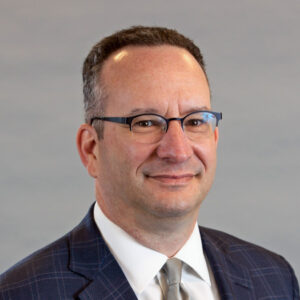
I am a professor of clinical pediatrics at Yale University School of Medicine/Yale New Haven Hospital, and a member of the Section of Pediatric Hematology-Oncology and the Center for Bleeding and Clotting Disorders. My patients range from infants to young adults with inherited bleeding and clotting disorders. After a long career leading an inpatient pediatric hematology consult service, I work solely in the outpatient setting. I also am involved in gene-therapy trials and set up the delivery of commercial hemophilia gene therapy.
Further, I am the chief medical and scientific officer for the National Bleeding Disorders Foundation, where my work helps define, develop, and implement its science and research strategies.
My career began when HIV was devastating the hemophilia community. During my fellowship, I cared for approximately 40 children who died from AIDS after receiving tainted clotting-factor concentrate. We now can deliver potentially curative gene therapy. I feel privileged to have been involved in clinical trials that led to the approval of these life-changing medications.
Many remarkable individuals have greatly impacted my career. I chose my specialty due to the mentorship of University of Wisconsin School of Medicine and Public Health (SMPH) Professor Paul Sondel, MD, PhD ’75 (PG ’80). Dr. Sondel and I discussed the potential of me taking time off from medical school to pursue a doctorate in cancer immunology. His example of patient-centered, state-of-the-art care deeply influenced the direction I took. Following my pediatric residency at Yale New Haven Hospital and during my fellowship at Yale, I worked closely with Diana Beardsley, MD, PhD. Her excitement around caring for children with inherited bleeding and clotting disorders was infectious. Her influence also helped shape my career.
I am active in the American Society of Pediatric Hematology-Oncology, the American Society of Hematology, the International Society of Thrombosis and Hemostasis, and the Foundation for Women and Girls with Blood Disorders.
Despite the incredible advances in our field, there are so many unanswered questions waiting to be explored. I have had an amazing career, and graduating from SMPH was the first stepping stone!