WMAA Executive Director Sarah B. Rothschild notes, “We are excited to welcome these new members to the WMAA Board of Directors. Their backgrounds span decades of medical education and diverse specialties in communities across the country, reflecting the breadth of our alumni network. Together, they share a lasting affinity for the University of Wisconsin School of Medicine and Public Health (SMPH) and a commitment to giving back in meaningful ways to future generations of students, alumni, and the school community.”
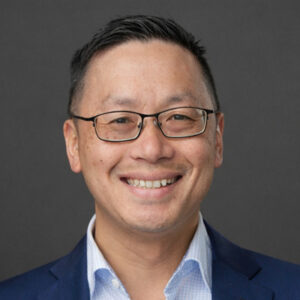
Jason Chiang, MD ’16, PhD ’14
Your practice?
I am an interventional radiologist at the University of California, Los Angeles David Geffen School of Medicine.
What moment made you certain that medicine was your calling?
As an undergraduate, I worked in a biomedical engineering lab, where I built brain electrodes for patients with intractable epilepsy. Watching the electrodes being implanted by neurosurgeons and immediately improving patient lives was incredibly motivating and drove me to become a physician‑scientist.
Is there a lesson from medical school that shapes your work?
The physician-scientist life requires true collaboration among bench scientists and clinical experts, which I saw with my SMPH mentors in the Department of Radiology: Fred Lee, MD; Louis Hinshaw, MD ’00 (PG ’04, ’05); Tim Ziemlewicz, MD; and Chris Brace, PhD ’05. This synergy between bench and bedside remains a core part of my practice.
What drew you to serve on the WMAA Board of Directors?
Our family loves to come back to Madison, and through WMAA, I hope to stay connected to the institution and community that shaped my career. I want to leave a legacy of mentorship and engagement to help future graduates feel the same support and connection that I have valued in my career.
What medical innovation or trend are you most excited about?
I am very interested in local, image-guided delivery of cell-based immunotherapies. As an interventional radiologist who treats early-stage or oligometastatic disease, I think we have a lot more we can do to advance these next-generation therapies.
Other updates?
My lab was awarded a National Institutes of Health R21 grant to develop antibody-conjugated microbubbles. Shortly after that, we received an R01 to utilize magnetic resonance perfusion to guide yttrium-90 dosimetry. We now have a team of talented post-doctoral and graduate students to support this work.
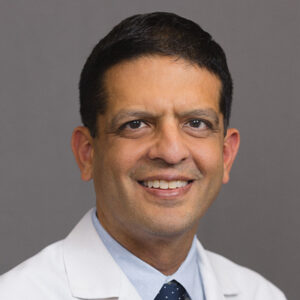
Anish Desai, MD ’98
Your practice?
I am a private practice gastroenterologist in Atlanta, Georgia.
What moment made you certain that medicine was your calling?
Taking an anatomy class in high school and shadowing an oncologist in high school and college were influential experiences. I was impressed by the oncologist’s interactions with patients.
Is there a lesson from medical school that shapes your work?
I learned that open collaboration with colleagues is a path to success for me as a physician and for the best care of my patients.
What drew you to serve on the WMAA Board of Directors?
I want to give back to our medical school as it has allowed my successes. When my friend and medical school classmate Ann Liebeskind, MD ’98, asked me to join WMAA, I thought it would be a great way to accomplish that. I believe sharing experiences with medical students helps them make decisions that they may not fully understand without advice from those of us who are working in this environment. I hope to leave a legacy of approachability. I also want to help promote the medical school and show others the high-quality education it provides.
What medical innovation or trend are you most excited about?
I think artificial intelligence, used appropriately, can help improve the quality of patient care and reduce physician stress and burnout.
What’s something you are passionate about?
I love to travel and experience life in different cultures. I also am an avid foodie and a die-hard Packers and Badgers fan.
Other updates?
I recently became an empty-nester, as my son is attending UW–Madison as a Navy ROTC scholar. Also, as of January 1, 2027, I will become a managing partner in my practice. I have fond memories of helping co-found the Deans Cup in 1995 when I was a second-year medical student. Everyone had fun in our winning season that year.
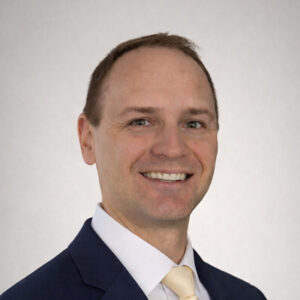
Matt Fischer, MD ’15 (PG ’19)
Your practice?
I am an anesthesiologist practicing interventional pain medicine in Appleton, Wisconsin.
What moment made you certain that medicine was your calling?
In my youth, I wanted to be a cowboy, but since then, I always intended to be a physician. My mom — a retired family practice doctor — has been a role model. Seeing the relationships she has built and the care she provided to patients in our small city confirmed that medicine is the career for me.
What drew you to serve on the WMAA Board of Directors?
I see the positive impact one can make through service on the board, and I hope to support our goal of training physicians who will practice in our great state.
What medical innovation or trend are you most excited about?
This is an exciting time to practice interventional pain management because our subspecialty continues to grow in neuromodulation and minimally invasive spine procedures. There are, perhaps now more than ever, more effective new therapies for patients, and many times we can offer these treatments in a way that obviates the need for “full blown” spine surgery. It is a privilege to be able to offer these therapies in Northeast Wisconsin.
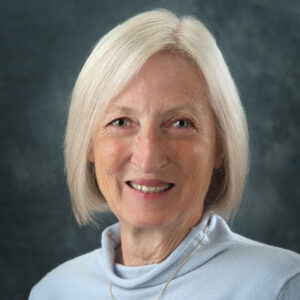
Wendy Hanneman, MD ’84 (PG ’87)
Your practice?
I practice family medicine with Aspirus Health in Wausau, Wisconsin.
Is there a lesson from medical school that shapes your work?
I remember preceptors who were kind when supporting patients in their health journeys. I wanted to emulate that in my career.
What drew you to serve on the WMAA Board of Directors?
My work has defined me for more than 40 years. I would like to share my passion for medicine by helping to advance the next generation of SMPH students and fostering alumni connections to support the communities we serve.
What’s something you are passionate about?
I love to travel and have visited all seven continents. A polar plunge in Antarctica was a recent highlight.
Other updates?
My son graduated from the UW Law School, and my daughter graduated from the UW School of Medicine and Public Health and practices family medicine. I have five young grandchildren who, hopefully, will be our third generation to wear Badger red!
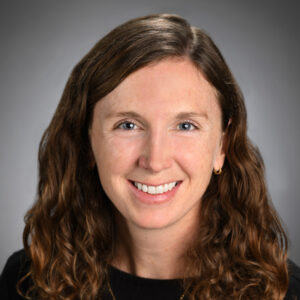
Caitlin Kaeppler, MD ’12
Your practice?
I practice pediatric endocrinology at the Medical College of Wisconsin and Children’s Wisconsin in Milwaukee.
Is there a lesson from medical school that shapes your work?
Volunteering at the free MEDiC clinics and engaging with the community as a medical student in the Training in Urban Medicine and Public Health Program taught me that everyone has a story worthy of our attention and curiosity. Understanding factors that shape a patient’s health helps us provide more meaningful care.
What drew you to serve on the WMAA Board of Directors?
I want to stay connected to the school and community that have had such an impact on my life. I am grateful for the opportunity to engage fellow alumni in supporting programs that enrich the student experience and our community.
What’s something you are passionate about?
After nearly a decade as a pediatric hospitalist, I pursued training to specialize in pediatric endocrinology. I was inspired by my daughter, who was diagnosed with Type 1 diabetes at age 2. This connection has given my career a renewed sense of purpose.
Other updates?
I met my husband, Mark Kaeppler, MD ’12, in our first week of medical school. Our four kids keep us busy and make life fun. It is special to realize that so much of the life we have built together started at the UW School of Medicine and Public Health.
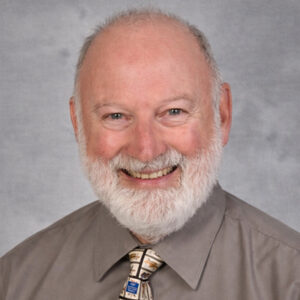
Robert Roger Lebel, MD ’82 (PG ’85, ’87)
Your practice?
Now retired from State University of New York Upstate Medical University in Syracuse, I have been a professor in five departments and served as the chief of medical genetics.
What moment made you certain that medicine was your calling?
As a graduate student in medical genetics, I felt called to be in the room with patients and families rather than in the laboratory.
Is there a lesson from medical school that shapes your work?
There are no substitutes for competence, compassion, and curiosity.
What drew you to serve on the WMAA Board of Directors?
I have a desire to give back by continuing to use my organizational and intellectual skills.
What medical innovation or trend are you most excited about?
My field of medical genetics is being revolutionized by technological advances that expand our diagnostic and therapeutic opportunities.
What’s something you are passionate about?
I have decided to be more visible and intentional about ally-ship with the LGBTQ+ community. My wife and I have been involved in PRIDE parades. I always wear a PRIDE pin.
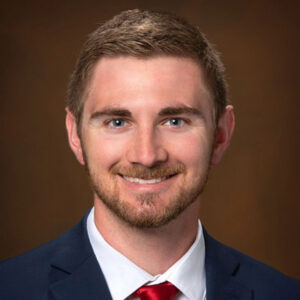
Brady Nelson, MD ’20
Your practice?
In inpatient and outpatient internal medicine at Emplify Health in La Crosse, Wisconsin, I enjoy helping people stay healthy and navigate acute illnesses.
What moment made you certain that medicine was your calling?
My grandpa was diagnosed with colon cancer while I was in college, after he missed the routine screening that could have prevented the condition. I wanted to become a primary care physician and help people prevent diseases.
What drew you to serve on the WMAA Board of Directors?
WMAA helped introduce me to one of my best friends from medical school, and the association has a huge impact on the wellbeing and support of medical students. I want to be a part of that mission.
What medical innovation or trend are you most excited about?
I teach point-of-care ultrasound and the simulation-based curriculum for internal medicine residents. Advancements have been incredible. I enjoy designing simulated scenarios and providing a safe place for students and residents to practice challenging medical scenarios before they encounter them in real life.
What’s something you are passionate about?
I am a lifelong Packers and Badgers fan. I enjoy running, weight-lifting, and playing sports. I learned how to downhill ski, which is another way to enjoy Wisconsin winters.
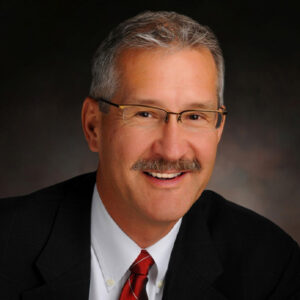
Kevin Wienkers, MD ’81
Your practice?
For more than 40 years, I have been a private practice ophthalmologist in Green Bay, Wisconsin.
Is there a lesson from medical school that shapes your work?
Over lunch when my medical school acceptance letter arrived, I let our local priest open it for me, for luck. He said, “Glory Be to God.” I knew I could not turn back and have been blessed ever since. The most important lesson is that we can never stop learning. Our patients need us to be the best.
What drew you to serve on the WMAA Board of Directors?
I accepted the WMAA position to pay back those who changed my life and to help make our SMPH program the best in the country.
What medical innovation or trend are you most excited about?
I am most excited about electronic medical records because I remember chasing down lab results and X-rays and creating long, handwritten histories.


