Alumni Effect

Badger Physicians Improve the Health of People and Populations Across the Nation and Beyond
August 25, 2026
VOL 28 NO 1
Share

For 70 years, the Wisconsin Medical Alumni Association (WMAA) has fostered strong relationships with medical students at the University of Wisconsin School of Medicine and Public Health. Connections remain strong as the students transition into the realm of alumni — fanning out throughout Wisconsin, the nation, and beyond.

“Our alumni make an impact every day in clinical care, public health, research, and leadership roles,” says Sarah B. Rothschild, WMAA executive director. “At the heart of their work is a shared goal: improving lives.”

Led by the WMAA Board of Directors, the association leads programs of value for students and alumni. Board members elect presidents, of which Kenneth Lemmer, MD ’30, was the first in 1956; Louis Bernhardt, MD ’63, is the oldest living past president; and Mathew Aschbrenner, MD ’06, is the newest, as of July 1, 2026.

Board members recommend and review programs that bolster those who follow in their footsteps. For instance, in 2002, they created the WMAA Student Scholarship Fund, which donors have supported ever since. And an early 2020s campaign with WMAA matching dollars — aimed at decreasing medical student indebtedness — yielded more than 30 new scholarships.

Many WMAA programs bring together students and alumni. For instance, the Student/Alumni Partnership Program matches students who have an interest in a specialty with alums to share advice and shadowing opportunities.

“Everyone benefits when alumni remain engaged with their classmates and alma mater,” says Rothschild; predecessors in her role were Ralph Hawley, James Griffith, and Karen Peterson.

These vignettes describe medical alumni who are making a difference in medicine and public health.

Innovation: Frederick A. Robertson, III, MD ’80

Frederick A. RobertsonCalling his career “unplanned” reflects Robertson’s humility about fruitful opportunities he has had in California and Wisconsin—the home states of his dad and mom, respectively.

Robertson was born in the Golden State and raised in the Dairy State. He recalls being influenced partly by his mom’s nursing career when he decided to enroll in molecular biology at the University of Wisconsin–Madison. Although he had never heard of crew, he was recruited to row with the team that won the 1975 national championship.

After earning his undergraduate degree at UW–Madison and completing his first two years of medical school at the Medical College of Wisconsin in Milwaukee, Robertson married a UW–Madison graduate student and transferred to the UW School of Medicine and Public Health (SMPH) to complete his medical degree.

Continue reading about Dr. Robertson

Robertson credits extraordinary SMPH faculty mentors — including Paul Carbone, MD, and Dennis Maki, MD ’67 — with helping guide decisions about his postgraduate training. He matched to University of California, San Francisco, for an internal medicine residency and switched to an anesthesiology residency.

While in his first clinical position at the Anesthesia Service Medical Group in San Diego, Robertson earned a master of business administration degree and expanded the practice. The degree served him well.

A former crew teammate recruited Robertson into a leadership role at the Milwaukee-based Marquette Medical Systems, a diagnostic cardiology company. He and his wife relished their move — despite a 100-degree temperature difference in January 1983 — because they wanted to raise their three children near their extended families.

Marquette Medical Systems was later purchased by GE Medical Systems, with Robertson continuing to lead, eventually becoming its chief clinical officer. (GE Medical Systems became GE Healthcare after Robertson left the company.)

In 1993, Robertson joined the Medical College of Wisconsin faculty and completed a pediatric anesthesiology fellowship at Children’s Hospital of Wisconsin. There, he practiced in that field, taught residents, and conducted clinical research.

Next, T. Rockwell (Rock) Mackie, PhD, an SMPH emeritus faculty member and co-founder of Tomotherapy, recruited Robertson to join that company. The start-up was in the early stages of commercializing its image-guided, intensity-modulated radiation therapy that targets tumors while minimizing exposure to neighboring tissues.

“Although I had not planned to re-enter the business world, this was a compelling opportunity and provided a chance to move back to Madison — a great place to live,” says Robertson, who served from 2005 to 2011 as Tomotherapy’s CEO and president of its board of directors as he helped the multi-million-dollar business become a public corporation. “It was both an exciting and turbulent time.” During that time, Robertson also lost his wife following a 10-year battle with Alzheimer’s disease.

In 2011, Accuray purchased Tomotherapy, and soon after, Robertson became an assistant professor in the SMPH Department of Anesthesiology. For about six years, he taught medical students and residents and practiced anesthesiology at UW Hospitals and Clinics.

Since his 2018 retirement, Robertson has worked with several early-stage health care companies as an advisor and/or board member. Among them is Ensodata, an artificial intelligence company related to sleep apnea, founded by a former UW–Madison biomedical engineering student for whom Robertson had been a mentor.

Now serving on UW–Madison’s Morgridge Institute for Research Board of Trustees, he is a venture partner for Baird Capital, a financial services firm in Chicago. Having remarried, Robertson and his wife also stay busy with their extended family and occasional travels.

When speaking to SMPH students, Robertson describes the ways in which he has leveraged his clinical and business backgrounds.

“I love to see other people succeed, and I am excited about the way technological advances can improve patient outcomes,” he notes. “What I learned at the UW School of Medicine and Public Health and in postgraduate training prepared me well clinically and has had a huge impact on my business-related ventures.”

He concludes, “Successful entrepreneurs surround themselves with talented people. I’ve been very fortunate in this way.”

Public Health: Lawrence Moore, MD ’19, MPH ’19

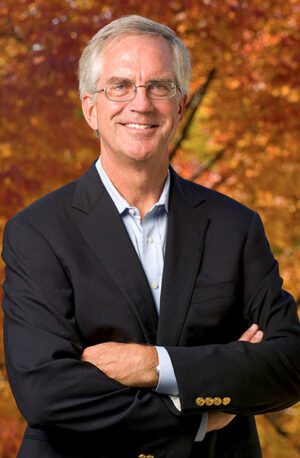
Lawrence M. MooreMoore’s often-overlapping experiences shaped who he is today. For instance, he says, “Working at Home Depot in college taught me a lot about talking to people in a manner similar to how we communicate in my clinic. I say, ‘Hey, what brings you in?’ ‘What experience do you have with that?’ ‘What do you have already, and what else would you need?’”
Two years of volunteer service in the U.S. Peace Corps in Botswana — where he helped facilitate HIV/AIDS mitigation efforts — heightened his passion to become a doctor and help communities.

“When I went into the Peace Corps, I was trying to decide how I wanted to be of service in my future career. I have always loved science, and I have a heart for service. My experiences made me realize how much I like to get to know people and their backgrounds, and I decided to become a family medicine doctor,” explains Moore, whose next steps included completing a post-baccalaureate, pre-medical program at the University of Wisconsin–Milwaukee to build on his international studies bachelor’s degree from UW–Madison.

Continue reading about Dr. Moore

He credits Patricia Cobb as being a “wonderful mentor” at UW–Milwaukee who connected him with the Rural and Urban Scholars and Community Health (RUSCH) program at the UW School of Medicine and Public Health (SMPH).

“I conducted pertussis and tuberculosis research through a joint effort among UW–Madison, UW–Milwaukee, and Aurora Health Care, and this opened my eyes to public health,” says Moore, adding that mentors in the SMPH Department of Family Medicine and Community Health — Paul Hunter, MD ’89, and Cynthia Haq, MD — pointed him toward the school’s Training in Urban Medicine and Public Health (TRIUMPH) program. “Their advice and encouragement made it much easier to navigate various opportunities.”

Moore earned his medical degree in the TRIUMPH program and completed a master of public health degree at the school. Having served as a co-president of the Medical Student Association, he has fond memories of working with the Wisconsin Medical Alumni Association (WMAA). Daily, he uses the stethoscope gifted to him through the association by Alex Tucker, MD ’75, a former (now deceased) WMAA board member whom Moore was grateful to meet.

Coming full circle to help others succeed, Moore is an associate program director of TRIUMPH, teaches in the Aurora Family Medicine Residency Program — from which he graduated — and practices family medicine in an Aurora Health Care outpatient clinic in Milwaukee.

“I strive to be a good mentor, coach, and sponsor at the postgraduate level. I also deeply value my patients’ trust. My goal is to be a source of information for them,” says Moore.

Many of his patients struggle with factors beyond their control, including the high cost of medications and limited access to specialty care. Moore always aims to “help patients get the best care they can.”

To this end, he calls on his understanding of the unique challenges faced by urban populations, and he builds strong rapport with patients, colleagues, and learners.

Advocacy: Rachel Weigert, MD ’14

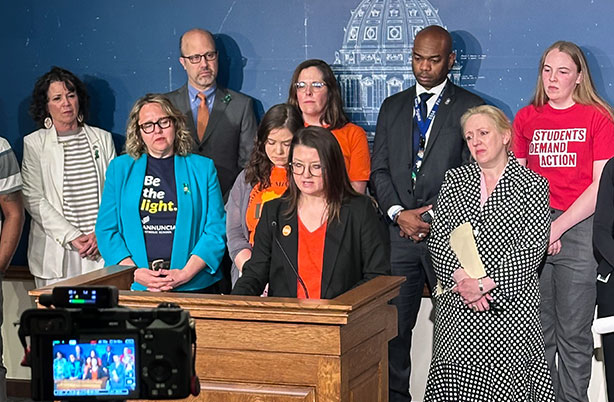
Rachel WeigertA pediatric emergency physician in Minneapolis, Minnesota, Weigert was among those who responded to the Annunciation Church and School shooting in August 2025. She has testified multiple times in front of the Minnesota Senate to share her experience and advocate for legislation to protect children and families.
“My time at the University of Wisconsin School of Medicine and Public Health  truly formed my career path. Advocacy training was thoughtfully woven throughout our medical curriculum. I knew I wanted to work in pediatrics, but incredible experiences in Madison and during my rural preceptorship in Black River Falls, Wisconsin, impacted my interest in pediatric emergency medicine,” says Weigert.

The Milwaukee, Wisconsin, native was part of the school’s Training in Urban Medicine and Public Health (TRIUMPH) program as a medical student.

Continue reading about Dr. Weigert

She says, “TRIUMPH helped hone the lens through which I see so many of the public health impacts on our patients and families.”

Upon earning her medical degree, Weigert completed a pediatric residency and year as chief resident at Children’s Hospital of Wisconsin in Milwaukee, followed by a pediatric emergency medicine fellowship at Children’s Minnesota in Minneapolis. Since completing that fellowship, Weigert has continued to engage in academic and advocacy pursuits, including mentoring other fellows and residents in their research projects.

Following the May 2022 mass shooting in Uvalde, Texas, Weigert felt like it was “only a matter of time before a similar tragedy would land at our doorstep.” This spurred her interest in research on screening in clinical settings about firearm storage.

“We have tested different ways to ask, as neutrally as possible, ‘Do you own a firearm, and how is it stored?’ Unfortunately, these questions often beget non-answers or non-truths,” says Weigert.

Because firearms are the leading cause of death in children, Weigert frequently writes editorial articles and testifies in front of various groups about topics related to firearm injury prevention, such as secure storage and the risks that unsecured firearms can pose for children as young as age 2.

She notes, “I hope we can reach many families and prevent injury and death. On a greater scale, I hope that my evidence-based advocacy work impacts future legislation.”

“I will never forget caring for six children who were shot during the mass shooting at Annunciation Church and School, less than a mile from my home. I want a safer community for children everywhere, including my daughters, to grow up in,” she says.

Research: David W. Chang, MD ’87

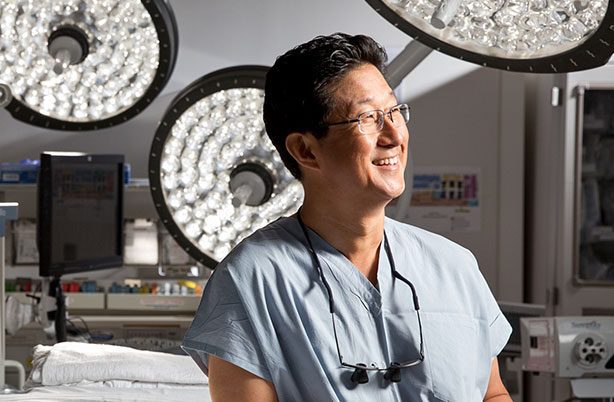
David W. ChangA coast-to-coast educational journey exposed Chang to mentors who helped shape his career. In medical school, a plastic surgery rotation revealed a new awareness.
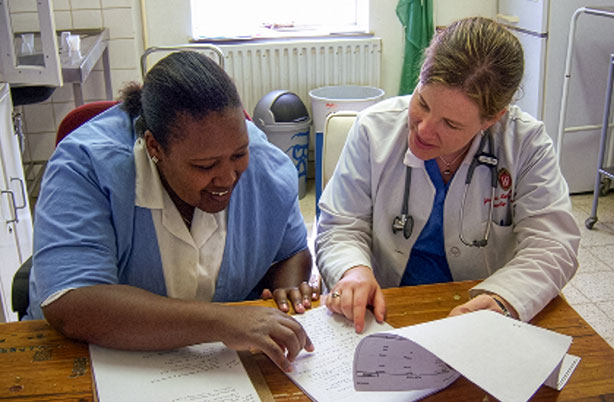
“Unlike other types of surgery, in which you usually remove things, in plastic surgery, we repair or make things. I found that fascinating because all my life, I have had a strong interest in working with my hands and creating things,” he notes.

As his career evolved, Chang completed a general surgery residency at the University of Illinois-Metropolitan Group Hospitals in Chicago, a plastic and reconstructive surgery residency at the Albert Einstein College of Medicine and Montefiore Medical Center in New York City, and a microsurgery and hand surgery fellowship at the Microsurgical Transplantation and Replantation Center in San Francisco. He has held academic appointments at MD Anderson Cancer Center in Houston and University of Chicago Medicine. At the latter, he is the Ruth Hanna Simms Foundation Professor of Surgery, chief of plastic and reconstructive surgery, medical director of the Plastic and Reconstructive Surgery Clinic, and founding director of the Comprehensive Center of Excellence for Lymphatic Diseases.

Continue reading about Dr. Chang

“My career focuses primarily on cancer patients who need microsurgical reconstruction for which we use tissue from another part of the body to reconstruct a missing part,” says Chang, who microscopically repairs small vessels in the process.

His recent research addresses previously untreatable lymphedema secondary to cancer treatment. Chang uses microsurgical techniques to allow obstructed lymphatic fluid to drain into a vein; he also transplants vascularized lymph nodes.

Chang was the principal investigator of a clinical trial about a novel method to treat lymphedema using collagen nanofibrils. Widely published, he has presented at numerous national and international meetings and served as a visiting professor around the world.

“I find my work incredibly rewarding. Much of my research stems from my curiosity when trying to answer questions I faced during my training and in my career,” says Chang, who trained under pioneers in the field and, in turn, has received national and international recognition.

Chang continues to teach and mentor residents, fellows, and other learners. He has participated in medical missions in Africa, Southeast Asia, the Far East, and Latin America.

“Making a difference in the lives of patients and other health care professionals is truly a privilege,” says Chang.

Humanitarian Work: Jackie Redmer, MD ’07 (PG ’11, ’13)

Jackie RedmerAs a college student, Redmer considered a career in natural sciences. Then, in the early 2000s, she served as a U.S. Peace Corps volunteer in Kazakhstan. Her role teaching English and working in public health sent her home with a changed outlook.
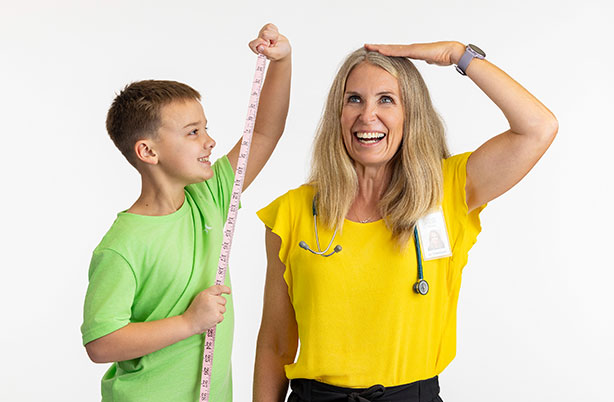
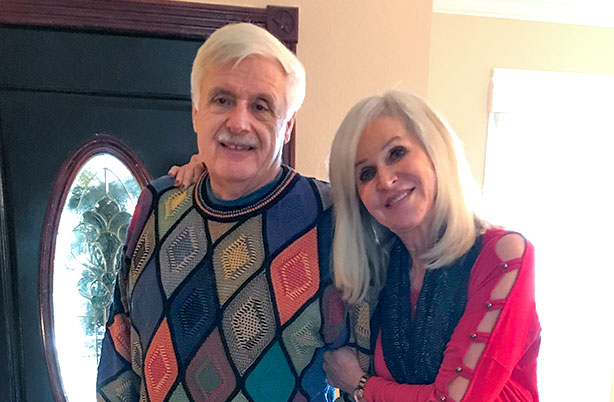
“Seeing the results of that country’s economic and social collapse gave me a deeper perspective on the social determinants of health,” she says.

After earning her medical degree and completing a family medicine residency — including international community health rotations — and an integrative medicine fellowship at the University of Wisconsin School of Medicine and Public Health (SMPH), Redmer practiced family medicine in Northlakes Community Clinic in Iron River, Wisconsin, and Gundersen Lutheran Health Center in Viroqua, Wisconsin. The experience of going through intense situations with patients and families during the COVID-19 pandemic created her desire to help with end-of-life care. Thus, in recent years, she has focused on palliative care and geriatrics and is pursuing board certification in hospice and palliative medicine.

Continue reading about Dr. Redmer

Redmer feels the practice of narrative medicine has helped her integrate her personal experience and medical humanism. She describes a day, about five years ago, when she “could not win” and found solace in writing the first poem of her life.

“I have always enjoyed listening to, reading, and writing stories, so narrative medicine was a natural fit for me. When we interface with the arts, it activates us in so many ways, and we expand our connections to each other and to the bigger world around us. This is valuable in health care because it enhances our observations, our listening skills, and our empathy,” says Redmer. “When I started practicing narrative medicine, I noticed that after sessions, even online, I felt more connected to other people.”

Redmer leads narrative-healing workshops, which engage a group around a selected topic.

“So many Americans feel lonely and disconnected. We have a basic need to be seen and heard by other humans,” says Redmer, adding that her free writing workshops help community members explore topics such as grief or pain in a safe format.

She explains, “I believe that all humans need and deserve respect. Humanitarian work is something we all do when we provide dignity for individuals and communities at home or abroad, regardless of our differences.”

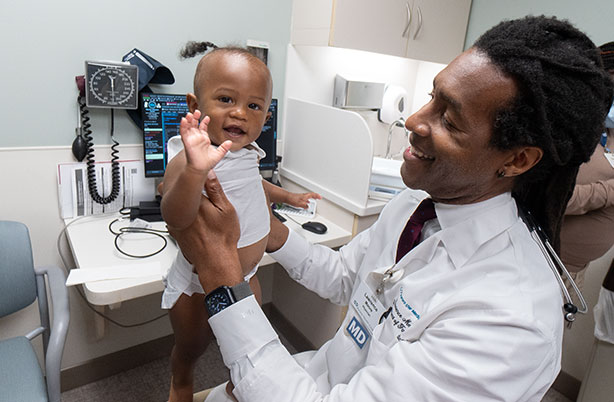
Patient Care: Wendy Hill, MD ’94

Wendy Hill
Photo courtesy of ThedaCare

Colleagues describe Hill as “beloved” based on the way she relates to patients, families, and teammates at Thedacare Pediatrics in Neenah, Wisconsin.

“I love teaching parents what to expect with their baby’s and children’s growth, development, feeding, sleeping, and other things they juggle,” says Hill. “I also enjoy the relationships I am able to build with each family and view that as a partnership to help their children achieve their true potential in physical, mental, and developmental health. I want parents to feel secure that they have a place they can message, call, or come to when they have concerns about their child.”

Hill especially loves working with newborns and their parents.

“Bringing home a newborn is an amazing time for parents, and I get to walk along with them and help make sure the baby is doing well,” she notes.

Continue reading about Dr. Hill

After earning her medical degree from the University of Wisconsin School of Medicine and Public Health (SMPH), Hill completed a pediatrics residency and year as chief resident at the Children’s Hospital of Wisconsin in Milwaukee. Originally from Wisconsin Rapids, she draws on 25 years of medical experience, mostly in central Wisconsin. For example, she served as the medical director at Children’s Hospital in Neenah, where she led am team that established the organization’s first pediatric hospitalist program.

In medical school, volunteer work at a homeless shelter — through the SMPH student-run MEDiC Program, which offers free clinics — solidified her dedication to primary care. Hill explains, “At a weekly clinic, we saw babies through adults, and I always gravitated to caring for the children.”

She continues, “I fell in love with pediatrics during my rotation in La Crosse, where I gained experience in inpatient and outpatient care. I was given a lot of autonomy, which helped my communication skills, ability to form relationships with families, and confidence with decision-making and problem-solving.”

Hill and her husband — a football coach and teacher — have four sons, all of whom played high school and/or college football. Hill quips, “I probably should have been an orthopedic surgeon because they have had their fair share of injuries.”

With one son playing for the Wisconsin Badgers and another working at Epic Systems in Verona and dating a recent SMPH graduate, Hill and her husband frequently visit Madison and take time to reconnect with her medical school classmates.

“I have the best friends from medical school. We had a great group that worked well on rotations and spent a lot of time together,” says Hill. “We come back for reunions and hold annual mini-reunions.”

Philanthropy: John Toohey, MD ’77

John TooheyFrom Sun Prairie and Hurley, Wisconsin, respectively, Toohey and his wife, Myrna, met while attending the University of Wisconsin–Madison. There, he had earned a bachelor’s degree in history and was beginning medical school at the UW School of Medicine and Public Health (SMPH), and she was completing a bachelor’s in social work. Having traversed the country for his career, they now spend summers in Durango, Colorado, and winters in San Antonio, Texas, near their grown children and grandchildren.

In his first and second years of medical school, Toohey was part of the Independent Study Program, which allowed some students to study at their own pace before entering their clinical years.

“It was a novel experience. Working in cohorts, we used videos and slideshows of presentations, in addition to going to the Medical Sciences Center for our anatomy laboratory. At the end of two years, we took the same exams as medical students who attended in person,” says Toohey.

Continue reading about Dr. Toohey

Noting that he loved medical school and rotations in the operating room, he chose to complete a rotating surgical internship and an orthopedic surgery residency at University of Oregon Health Sciences Center in Portland. Toohey then took a faculty position at the University of Kansas School of Medicine in Wichita, and he practiced at the Wichita Clinic.

“After 13 years in Wichita, I wanted to specialize further, so I completed a spine surgery fellowship at South Texas Orthopaedic and Spinal Surgery Associates in San Antonio,” he explains.

In 2101, he joined the faculty of the University of Texas Health Science Center at San Antonio, where he served as the Laura B. Flawn, MD, Endowed Professor in Diseases of the Spine and Spine Trauma and eventually became the director of the orthopedic surgery residency and assistant dean of graduate medical education. Among other accomplishments, Toohey and his colleagues helped develop a carbon fiber cage to stabilize the spine during fusions, gained U.S. Food and Drug Administration approval, and published and presented their research.

“My medical education is among the reasons for my wonderful career,” says Toohey. “I am proud of the UW School of Medicine and Public Health’s reputation — the school prepares its graduates well for wherever they go. So, when we started making gifts to help others succeed, the school was our first choice because of what it allowed me to do in my life.”

To that end, the couple created the Dr. John S. and Myrna J. Toohey/Wisconsin Medical Alumni Association Scholarship Fund for SMPH medical students and have contributed to WMAA in other ways.

Toohey elaborates, “Our vision is to help give medical students the type of opportunities I have had, but without as much financial worry. When I took out loans to get through, the interest rate was much lower than today.”

Now retired, he works part time as a consultant. Toohey is planning to return to Madison for his MD Class of 1977’s 50-year reunion in 2027.