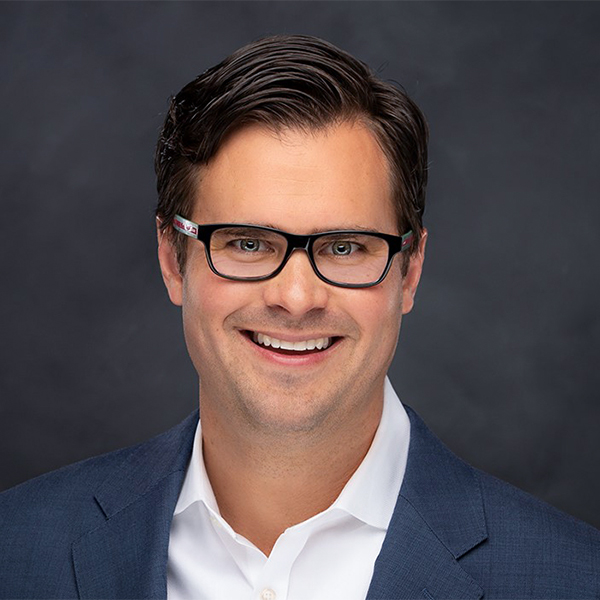
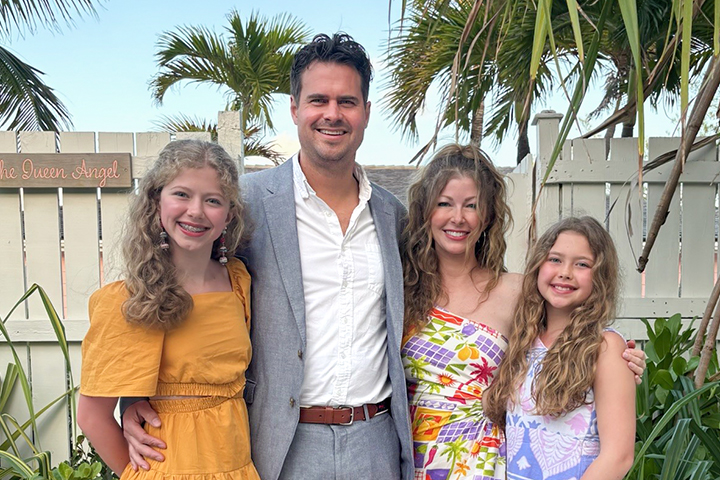
Social and professional connections are central to the Aschbrenners’ lives and among the reasons he joined the Wisconsin Medical Alumni Association (WMAA) Board of Directors in 2014 and began a two-year presidential term in summer 2026.
“In medical school, I was heavily involved with the Medical Student Association, and I loved the people associated with WMAA and the UW School of Medicine and Public Health,” he recalls. “I had many wonderful mentors, including then-Dean Philip Farrell and Drs. John Harting and Daniel Albert. They helped me get where I am today.”
Aschbrenner continues, “When I came back to Wisconsin, I wanted to stay involved in supporting medical students, especially by increasing the funding for student scholarships and for the WMAA Stethoscope Program, in which generous donors purchase a stethoscope for each entering medical student.”
Since medical school, Aschbrenner has served as a Class of 2006 co-representative with Kathryn E. “Katie” Nixdorf, MD ’06 (PG ’10), a dear friend and fellow WMAA board member who died in 2022. Aschbrenner led the charge to rename the Class of 2006 Scholarship in Nixdorf’s honor and foster its growth to benefit the next generation of physicians.
“My fondest memories of medical school surround the camaraderie among my classmates and the long-term relationships we made. For example, one of my classmates, Michael Stadler [MD ’06], and I were roommates in our undergraduate years and throughout medical school. He married Neda Esmaili [MD ’06], and the three of us had overlapping postgraduate training in North Carolina and Missouri,” explains Aschbrenner, adding that Stadler and Esmaili practice otolaryngology and ophthalmology, respectively, in Milwaukee.
“All three of us were born in Wisconsin and attended college and medical school in Wisconsin. We went away for further training and came ‘home’ to practice. And we are still friends. I think that’s a Wisconsin success story,” Aschbrenner says.
Returning to Wausau as a physician feels quite different from his younger years.
“The gem is being able to treat eye diseases for patients, some of whom are my family members, former teachers, and pillars of the community. I want the best for all my patients, and that usually comes with great joy, but it can bring heartaches when the disease wins,” Aschbrenner reflects.
He is the senior of three retina specialists at the Eye Clinic of Wisconsin. There, 19 health care providers treat all ophthalmic conditions other than ocular oncology. Aschbrenner is part of the clinic’s three-president team.
“Most of my days are heavily clinic-based, with surgeries one day per week. My patients travel from anywhere between Wisconsin Rapids and the Canada border. This large region is why I do weekly satellite clinics in Rhinelander, Wisconsin. Most of those patients travel an hour or two to get there,” he says, adding that other retina partners provide satellite care in Antigo, Stevens Point, Marshfield, and Medford, Wisconsin.
Describing his field as “fast-paced and demanding,” Aschbrenner says, “Most of my patients are elderly, with eye conditions such as macular degeneration and retinal vein occlusions. Some require intravitreal injections every four to six weeks, so we get to know them well.”
He also cares for newborns with conditions such as retinopathy of prematurity. For this, he travels nearly every Tuesday to Wausau Aspirus Hospital.
Reflecting on the gratifying nature of his work brings with it another type of gratitude: the ability to maintain balance and carve out family time.
“I have always been a passionate person, so when it comes to choices between sitting down and relaxing or doing something, I tend to do something,” says Aschbrenner, adding that his family skis frequently at nearby Granite Peak Ski Area and about once each year out west. “We also have a little Shasta camper, and we visit as many national parks as possible.”